
Victor’s Shocking Deal Changes Phyllis’ Life Forever! What Happens Next? | Y&R Spoilers
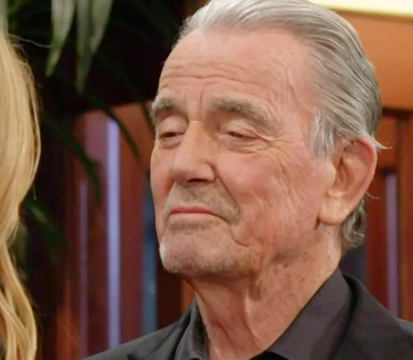
The cutthroat, glass-paneled corridors of Genoa City have borne witness to some of the most ruthless power plays in daytime television, but the blockbuster June 4th installment of The Young and the Restless has shattered all previous metrics of corporate warfare, transforming a routine asset transfer into a masterclass of absolute psychological devastation. The grand illusion of a structural reboot took center stage as a hollowed-out Phyllis Summers formally signed the keys to Newman Enterprises back over to the legendary patriarch Victor Newman, effectively executing her short, chaotic reign as the sovereign queen of the business elite. In exchange for this ultimate corporate surrender, the silver-haired monarch promised to deploy his immense subterranean influence to force Christine Blair to permanently drop the fabricated criminal charges hanging over Phyllis’s head—a high-stakes trade of personal liberty for dynastic legacy that on the surface felt like a simple transaction. Yet, when viewed through the lens of history, this boardroom treaty was exposed as a dark, meticulously engineered public humiliation ritual; Victor did not merely crave the clinical restoration of his empire, but actively demanded to watch the fiery phoenix crawl on her hands and knees while his sycophantic children tripped over one another to praise his hollow virtue. For a woman who has historically climbed over literal bodies, faked a fiery ambulance execution, and systematically slaughtered a man with scissors to maintain her position, this transactional compliance marks a staggering psychological blow that strips away her identity as an unstoppable force of nature, plunging her into a state of absolute, unadulterated emptiness.
The true, stomach-dropping trigger behind Phyllis’s sudden willingness to follow the rules of civilized engagement completely bypasses the sterile threat of a prison cell, rooting itself instead in the deafening, post-traumatic silence radiating from her own family network. The real structural fracture detonated inside her soul when her children, Summer and Daniel, crossed the line from baseline anger into a state of absolute, icy detachment, permanently exiling their mother to the outside looking in while a nearly dead Nick Newman fought for his breath in a sterile intensive care unit. Realizing that the glittering Newman throne was merely a gilded prison that cost her the very bloodline she built it to impress, a hyper-ventilating Phyllis surrendered to Victor’s terms out of a primitive, white-hot terror of ending up exactly where she started her adult life—completely isolated in a dark room with nothing to anchor her reality but a beautifully manufactured lie. This deep-seated insecurity was laid bare during a raw, bleeding interaction with Michael Baldwin at the Genoa City Athletic Club, where a weeping Phyllis confessed she had absolutely nothing to show for months of architectural deception, her eyes lingering frantically on her own portrait as she realized she had sacrificed her dignity for an executive title that failed to manufacture the love she craved. Victor, functioning as the ultimate corporate zookeeper, expertly identified this emotional vulnerability and moved with predatory precision to keep his most volatile predator safely contained, strategically gifting her the fixer-upper remains of Arabesque not as a reward for saving Nick’s life, but as a calculated leash to keep her mind safely distracted inside a sandbox so she doesn’t kick over his actual castles.
The sheer, staggering hypocrisy of this high-octane peace offering unmasks Victor Newman as a ruthless corporate raider who proudly utilizes the exact brand of underground trickery, deception, and kidnapping he routinely condemns in others, weaponizing his own son’s real-time addiction struggles and near-death experience as a transactional bargaining chip to reclaim his crown. Phyllis’s toxic obsession with Newman Enterprises was never truly driven by commercial spreadsheets or profit margins; it was a psychological crusade to steal the father figure’s sovereign power to prove to her internal demons that she never needed one, a tragic cycle of trauma that Victor knows exactly how to exploit by feeding her small crumbs of professional respect. Yet, anyone expecting Genoa City to settle into a state of domestic peace is operating under a deluded fantasy, as the central tension smoothly migrates from the public boardrooms straight into the dark back alleys where Victor is actively maneuvering a terrifying new human weapon. Tucked away on the Newman Ranch as a personal pet project is Matt Clark, the notorious monster who previously terrorized the local community, whom Victor is methodically grooming to serve as a lethal enforcement tool in an impending, blood-soaked campaign against a highly suspect Cane Ashby. Though the mustache explicitly ordered a compromised Phyllis to maintain an absolute spatial and corporate distance from the operation, history dictates that the red hurricane has never stayed out of a localized disaster in her entire life.
This toxic intersection of secret weapons and repressed guilt is poised to ignite a two-fold, paradigm-shifting catastrophe that will violently incinerate the fragile architecture of Phyllis’s maternal redemption arc before the summer sun sets on the aristocracy. Driven by an unyielding, pathological necessity to validate her own search for redemption by fixing completely broken men, Phyllis is rapidly racing toward a dangerous, high-stakes collision with Matt Clark, a psychological mirror-match that will permanently destroy her remaining progress with Summer and Daniel when they witness her coddling a sociopath as the ultimate, unforgivable betrayal of their trust. Simultaneously, an absolute biological and corporate time bomb is ticking frantically within the central nervous system of Billy Abbott, who currently finds himself completely ruined and absolutely fuming after losing Chancellor once again due to the collateral damage of Phyllis’s backroom deal with Victor. Refusing to play the role of the passive victim while Lily Winters mindlessly lights a match next to a powder keg by hiring a guilty Cane Ashby to steer the executive ship, a vengeful Billy is preparing to launch a scorched-earth counter-offensive that will drag both dynasties into a total, unyielding war of attrition where a compromised Phyllis will be trapped directly in the firing line of a blaze she personally helped ignite.
As the heavy, dramatic credits prepare to roll on a community standing on the absolute precipice of a definitive, paradigm-shifting transformation, the overarching shadow of corporate Stockholm syndrome hangs over the Newman children like a suffocating executioner’s axe. While Phyllis frantically attempts to rebrand her high-stakes corporate theft as a tiny, forgivable mistake washed away by a singular heroic act, her ego is already quietly plotting her next move from the terrace of the GCAC, fiercely rejecting rumors that she could ever survive a subordinate staff meeting working under Sharon at Cassidy First Technology. Backed by a supportive Lauren Fenmore at Arabesque, she will aggressively attempt to leverage her new CEO title to maintain her place among the local elite, entirely blind to the reality that a change of company name can never truly alter the predatory mechanics of her baseline human nature. In a television universe where trust is a transaction, family history is weaponized as an instrument of control, and old connections routinely mutate into lethal weapons, Phyllis Summers is about to learn that her tactical retreat into a nicer cage is merely the quiet before an absolute massacre of reputation and legacy, leaving a spellbound audience to hyperventilate into the dark as they wait for the trap to violently snap shut.