
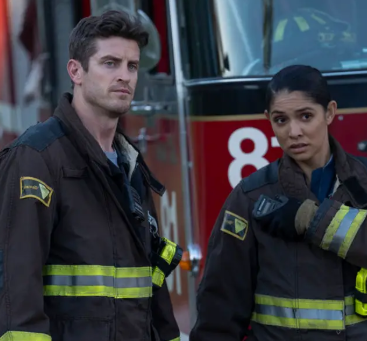
Chicago Fire Continues to Prove Why It’s One of TV’s Most Beloved Dramas
When Dick Wolf launched Chicago Fire on NBC in the fall of 2012, few could have predicted the massive television empire it would ignite. Over a decade later, Firehouse 51 remains the blazing heart of the legendary One Chicago franchise. While many procedural dramas lose steam after a few seasons, falling victim to repetitive storylines and cast fatigue, Chicago Fire continues to defy the odds. Year after year, it dominates prime-time ratings, commands a fiercely loyal global fanbase, and stands tall as a masterclass in network television.
But what is the secret behind this enduring success? How does a show about a fictional Chicago firehouse continue to feel fresh, urgent, and deeply moving after hundreds of episodes?
The answer lies in a perfect storm of character-driven storytelling, authentic high-stakes action, an unwavering sense of community, and an innate ability to evolve without losing its core identity. Chicago Fire doesn’t just entertain; it comforts, thrills, and connects. Here is an in-depth exploration of why this flagship drama continues to prove it is one of television’s most beloved series.
1. The Power of Firehouse 51: A Chosen Family Like No Other
At its core, Chicago Fire is not just a show about fighting fires; it is a profound exploration of found family. The dynamic within Firehouse 51 mimics the real-life camaraderie of first responders, where trust is not just a workplace courtesy—it is a matter of life and death.
The chemistry among the ensemble cast is palpable and serves as the emotional anchor for the entire series. From the shifting leadership dynamics to the quiet moments around the kitchen table, the show excels at portraying the everyday vulnerabilities of heroes. When the alarms sound, they are elite professionals; when the alarms clear, they are ordinary human beings navigating grief, romance, financial struggles, and personal trauma.
This balance prevents the series from feeling like a sterile procedural. Viewers aren’t just tuning in to see a building burn; they are tuning in to see how Kelly Severide, Stella Kidd, Christopher Herrmann, and Joe Cruz survive the emotional aftermath. The kitchen table at 51 is symbolic—it’s a sanctuary where socio-economic, generational, and ideological differences melt away in favor of mutual respect and love.
2. Masterful Character Evolution and Managing Cast Transitions
One of the greatest challenges any long-running television show faces is the inevitable departure of core cast members. Lesser dramas often collapse when their lead actors exit. Chicago Fire, however, has turned cast rotation into a masterclass in narrative evolution.
Consider the departures of foundational characters like Matthew Casey (Jesse Spencer) and Chief Wallace Boden (Eamonn Walker). Instead of treating these exits as catastrophic disruptions, the writers integrated them seamlessly into the show’s ongoing themes of growth and legacy.
-
Passing the Torch: When Casey departed, it allowed Stella Kidd to step up as a lieutenant, showcasing a realistic, hard-earned trajectory for a female leader in a male-dominated field.
-
Fresh Blood, Traditional Values: New additions to the firehouse are never carbon copies of the characters they replace. They bring unique flaws, backgrounds, and conflicts, which injects new energy into the dynamic while forcing the veteran characters to adapt as mentors.
By allowing characters to grow, fail, get promoted, or move away, Chicago Fire mirrors the reality of a real-world firehouse. This commitment to organic progression keeps the stakes high—viewers know that no one is entirely safe, and change is the only constant.
3. High-Octane Realism and Technical Authenticity
In an era where audiences are saturated with CGI-heavy blockbusters, Chicago Fire stands out by anchoring its action sequences in breathtaking practical effects and technical realism.
The production team works in close tandem with real-life Chicago firefighters, who serve as consultants, background extras, and technical advisors. The actors undergo rigorous training to ensure that the way they handle tools, break down doors, carry victims, and communicate during a crisis is completely accurate.
Did You Know? The smoke and fire seen on Chicago Fire are frequently real. The production uses controlled burns on practical sets to capture the genuine grit, sweat, and danger that digital effects simply cannot replicate.
This dedication to authenticity does two things:
-
It honors the real-life first responders who risk their lives daily.
-
It creates an immersive, claustrophobic atmosphere for the viewer.
When Squad 3 is trapped in a collapsing, smoke-filled basement, the tension is visceral. You can hear the heavy breathing through the oxygen masks; you can see the genuine exhaustion on the actors’ faces. This high-level production value ensures that the action sequences are just as compelling as the interpersonal drama.
4. The “One Chicago” Universe: The Gold Standard of Cross-Over Television
It is impossible to discuss the success of Chicago Fire without acknowledging its role as the foundation of Wolf Entertainment’s One Chicago universe. Alongside Chicago P.D. and Chicago Med, the franchise has redefined how shared universes operate on network television.
       [ CHICAGO FIRE ] (The Flagship & Heart)
         /          \
        /            \
[ CHICAGO P.D. ] <---> [ CHICAGO MED ]
(The Grit & Justice)   (The Science & Humanity)
Unlike traditional TV crossovers that feel forced or gimmicky, the integration between the Chicago shows feels completely organic. Firefighters pull victims from wrecks and hand them directly to the doctors of Chicago Med. When an arson case turns into a homicide investigation, the intelligence unit from Chicago P.D. steps in.
This structural synergy offers several distinct advantages:
-
Expansive Storytelling: It allows for massive, multi-hour crossover events that feel like cinematic features, pulling in millions of casual viewers.
-
Casual Interactivity: On a week-to-week basis, characters casually drop by Molly’s Pub (the bar co-owned by the firefighters), seamlessly blending the worlds and rewarding loyal fans who watch all three shows.
-
Brand Loyalty: It turns a single hour of television into a three-hour block of highly addictive appointment viewing every Wednesday night.
5. Balancing Heartbreaking Tragedy with Essential Comic Relief
A drama that is relentlessly bleak quickly becomes exhausting to watch. Conversely, a show that treats life-or-death situations too lightly loses its dramatic weight. Chicago Fire has mastered the delicate tonal tightrope walk between devastating tragedy and lighthearted comedy.
The writers understand that humor is a vital coping mechanism for first responders. For every heart-wrenching episode involving a line-of-duty death or a devastating personal loss, there is a subplot dedicated to the hilarious, mundane antics of the firehouse.
-
Molly’s Pub: Serving as the setting for countless comedic schemes, business ventures, and lighthearted arguments, Molly’s provides the perfect physical space for characters to wind down.
-
The Dynamic Duos: Over the years, pairings like Herrmann and Mouch, or Cruz and Otis, have provided legendary comedic relief. Their bickering over side hustles, firehouse pranks, and aging bodies provides a beautiful, comforting contrast to the intense trauma they witness on the streets.
This tonal balance ensures that the show never feels overwhelmingly depressing. It reflects the full spectrum of human emotion, making the viewing experience deeply satisfying and emotionally sustainable over a 20+ episode season.
6. Socially Relevant and Emotionally Resonant Themes
While Chicago Fire is an entertainment piece first, it has never shied away from tackling complex, real-world social issues. What sets it apart is its approach: it avoids heavy-handed lecturing, choosing instead to explore these issues through the personal lenses of its characters.
Throughout its run, the series has tackled critical topics, including:
-
Mental Health and PTSD: Highlighting the psychological toll of firefighting, showing heroes seeking therapy, dealing with substance dependency, and supporting one another through trauma.
-
Systemic Corruption and Bureaucracy: Exploring the frustrations of dealing with political red tape, budget cuts, and top-down decisions that jeopardize public safety.
-
Gender and Equality: Tracking the systemic hurdles faced by women in the fire service through Stella Kidd’s “Girls on Fire” initiative, an organic subplot that highlighted empowerment and mentorship.
By grounding these systemic issues in the lived experiences of characters the audience already loves, the show fosters deep empathy and sparks meaningful conversations among its viewers.
7. The Power of Romance: Ships That Drive the Fandom
Let’s be honest: a major component of any beloved drama is its romantic storylines, and Chicago Fire boasts some of the most passionate “shipper” communities in modern television history.
The slow-burn romances, intense chemistry, and relationship obstacles are major drivers of audience engagement. The show avoids cheap soap-opera tropes, preferring to build relationships on a foundation of mutual professional respect and shared trauma.
These relationships aren’t just background noise; they fundamentally shape character arcs. For instance, watching Kelly Severide transform from a commitment-phobic playboy into a devoted, supportive husband to Stella Kidd is one of the most rewarding, multi-year character evolutions on television. The writers understand that the stakes of a relationship are just as compelling as the stakes of a structural fire.
8. Why Chicago Fire Remains Essential Viewing in the Streaming Era
In today’s fragmented media landscape, where streaming platforms drop entire seasons at once and flash-in-the-pan viral shows disappear from public consciousness in a matter of weeks, Chicago Fire represents the enduring power of appointment television.
There is a distinct comfort in the procedural, episodic-serial hybrid structure. It offers a predictable, comforting format while simultaneously building long-term narrative momentum. It is the ultimate “comfort food” television, yet it packs the emotional punch of a prestige cable drama.
Furthermore, the show’s setting plays a massive role. The city of Chicago is not merely a backdrop; it is a living, breathing character. The show highlights the diverse neighborhoods, the local architecture, the brutal winters, and the fierce civic pride of the Midwest. This grounded, localized setting gives the show a distinct identity that distinguishes it from the glossy, hyper-stylized dramas set in New York or Los Angeles.
Conclusion: The Flame That Won’t Burn Out
After more than a decade on the air, Chicago Fire has achieved something truly rare in the television industry: sustained excellence. It remains a ratings juggernaut, a critical darling of network TV, and a beloved fixture in millions of households worldwide.
It succeeds because it never forgets what it is. It doesn’t try to be a cynical, dark anti-hero piece, nor does it dissolve into a superficial melodrama. It remains an earnest, thrilling, and deeply empathetic tribute to the everyday heroes who run into the danger when everyone else is running away.
With a brilliant production team, a cast that treats each other like family, and an endless supply of heart, grit, and humor, Chicago Fire continues to prove why it is one of television’s most beloved dramas. As long as the bells keep ringing at Firehouse 51, global audiences will undoubtedly continue to answer the call.