

Gary Knocks Theo To The Ground | Coronation Street
The rain-slicked labyrinths of the Weatherfield cobblestones are currently buckling under the suffocating weight of an absolute forensic nightmare and an unyielding domestic crossfire, as the dramatic fallout from a brutal homicide and a terrifying shooting pushes the residents of Coronation Street over a definitive structural precipice. The psychological warfare surrounding the execution of the notorious abuser Theo Silverton reached a breathtaking, white-hot peak during Wednesday’s mind-bending episode, which treated gripped viewers to a controversial, highly stylized flashback sequence that placed the volatile Gary Windass directly at the dark epicenter of the crime scene. Suspended high above the concrete on industrial scaffolding, a rigid Gary could be seen clutching a blunt metal object seemingly harvested from the nearby builder’s yard, his haunted gaze locked onto the crimson reality below where Theo’s lifeless, blood-drenched body lay completely motionless. While Kit Green’s official investigation has aggressively locked onto the seasoned squaddie as his absolute primary suspect, a hyper-vigilant fandom has launched a massive counter-offensive of skepticism, arguing that Gary’s immediate, jaw-dropping reaction in the memory resembled the paralyzing shock of a bystander stumbling upon a corpse rather than the manic adrenaline of an active killer. With official ITV insiders dropping the high-stakes teaser that the genuine culprit will remain permanently unshadowed until the burning heat of late June or early July, speculation is wildly mutating across social media platforms, with viewers fiercely convinced that this cinematic memory is a massive, deliberate red herring engineered to frame a fundamentally innocent man. A highly popular narrative trajectory suggests that Gary is actually acting as a silent, self-sacrificing shield to protect his former corporate partner, Sarah Platt, as the deeply suspicious pair continue to engage in erratic, secretive behaviors that imply they are protecting the cunning Todd Grimshaw, entirely blind to the devastating possibility that they are mutually gaslighting one another into an inescapable prison sentence without ever asking what truly transpired in the dark.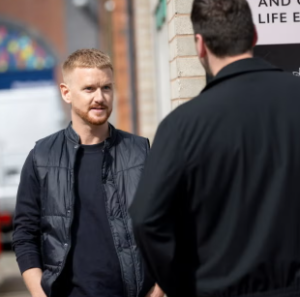
While the fictional department of justice blindly hunts for clues in the shadows of the builder’s yard, an entirely separate, heart-stopping nightmare of domestic treason is detonating across town, forcing the Webster family into a catastrophic physical showdown that will leave the pavement running thick with literal blood. The long-simmering, toxic furnace of resentment between Carl and Kevin Webster violently overflows the boundaries of the garage, culminating in a white-hot, unadulterated street brawl where centuries of brotherhood are instantly executed in a matter of frantic seconds. The confrontation takes a dark, lethal turn when a completely unhinged Carl suddenly pulls a cold, heavy firearm from his jacket, forcing a panicked Kevin to launch a desperate, weeping counter-offensive as both mechanics frantically engage in a raw, primitive tussle for absolute possession of the weapon. Tempers flare into white-hot oblivion and all civilized control is permanently erased from the street as the dual forces of momentum and panic cause the cold metal trigger to be violently depressed. A single, deafening gunshot cracks through the damp Weatherfield air with the force of an absolute thunderbolt, instantly shattering the local tranquility and leaving the surrounding witnesses to paralyzingly realize that a life-altering tragedy has just rewritten the entire hierarchy of the Webster family bloodline in a single microsecond of white-hot madness.
The acoustic vibrations of that devastating gunshot are poised to act as a catastrophic, real-time psychological trigger for a deeply fragile Debbie Webster, who begins next week trapped in the suffocating trenches of an unyielding, post-traumatic stress disorder inside the walls of the Chariot Square Hotel. Her harrowing day initiates under the cloud of a vivid, sweat-soaked nightmare that forces her subconscious to brutally relive the terrifying logistics of the family’s recent gun-related trauma, leaving her visibly shaking, anxious, and emotionally bleeding before her professional responsibilities can even begin. Desperate to maintain her fierce pride and project a pristine, unbroken facade of corporate competence to the upper-class clientele, Debbie aggressively throws herself into her managerial duties, desperately attempting to drown out the echoes of her internal warfare with the mundane logistics of hospitality. Yet, her carefully constructed shield is violently dismantled during a routine business discourse when she becomes entangled in a sharp, high-tension argument with the perpetually toxic Tracy Barlow over a mismanaged floral arrangement. Instead of displaying a shred of human empathy or professional grace, a calculating Tracy delivers a brutally cruel, weaponized remark that strikes straight at Debbie’s absolute deepest insecurity, callously suggesting that her escalating, real-time dementia struggles are the sole variable responsible for the commercial mistake—a sickening psychological blow that permanently deflates Debbie’s confidence and leaves her swimming in a sea of absolute frustration and public embarrassment.
Struggling to maintain her regal composure in the wake of Tracy’s cold-blooded insult, a thoroughly hollowed Debbie forces herself to oversee a high-profile, sentimental event being hosted inside the glittering main ballroom of the luxury hotel, where an expectant young couple has gathered their entire network of friends and family for an extravagant gender reveal party. Operating in a state of absolute cognitive exhaustion, her frayed mind suffers a devastating slip-of-the-tongue as she casually chats with the parents, inadvertently blabbing the highly confidential medical secret that the couple is expecting a beautiful baby boy and instantly vaporizing months of meticulous planning and theatrical surprise in a single, jaw-dropping sentence. Horrified by her own catastrophic error, a weeping Debbie freezes as an awkward, suffocating silence paralyzes the entire room, prompting a hyper-vigilant Ryan Connor to rapidly leap into the line of fire to smooth over the social damage, offering a frantic, charming apology on her behalf to soothe the completely disappointed parents. But before the atmospheric pressure in the ballroom can fully settle into a state of recovery, a celebratory balloon suddenly bursts with a violent, hyper-resonant pop that echoes through the sterile concrete corridors of the hotel like a lethal explosive device.
The ordinary auditory anomaly hits Debbie’s hyper-sensitized neurological system with the force of an actual military execution, completely short-circuiting her connection to the year 2026 and instantly catapulting her panicked consciousness straight back into the blood-soaked reality of Carl and Kevin’s horrific garage standoff. While the regular patrons of the Chariot Square barely bat an eyelash at the harmless party noise, an overwhelmed Debbie experiences an immediate, white-hot rush of primitive terror as her heart hammers violently against her ribs, completely rendering her incapable of distinguishing between the festive atmosphere of the ballroom and the terrifying memories that continue to hunt her in the dark. Paralyzed by the absolute, unadulterated conviction that a secondary active gunman has breached the hotel perimeter to finish off her family, she stands trapped in an invisible, psychological cage of pure panic, a heartbreaking testament to the reality that the wounds of gun violence continue to bleed long after the sirens fade. As the credits prepare to roll on a community fractured by secrets, lies, and flying bullets, viewers are securely buckled into an unforgettable, high-octane emotional rollercoaster on ITV1 and ITVX, waiting to see if the amateur brilliance of the street can liberate these broken souls before the dark currents of Weatherfield consume them completely.