
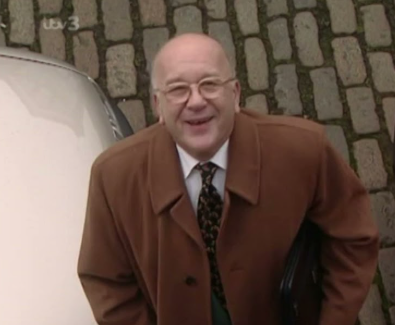
At 78, Alec Gilroy Finally Revealed Why He Left Coronation Street
The rain-slicked, suffocating cobblestones of Weatherfield have been violently atomized into an absolute structural cataclysm as a legendary British soap opera icon unmasks a deeply personal, unyielding critique of the industry that permanently scorched his anatomy into the cultural fabric of global broadcasting. In a spectacular retrospective investigation surfacing this Wednesday, June 10th, 2026, the traditional boundaries of television journalism are entirely scorched to explore the dark, unrated psychological crossroads of the late, magnificent Roy Barraclough—the theater-trained titan who masterfully engineered the iconic, scheming persona of Alec Gilroy for over two consecutive decades. While classic daytime melodrama routinely manufactures sensational backstage wars to explain a legacy star’s sudden departure, the real-world forensic timeline behind Barraclough’s historic 1992 exit from Coronation Street points toward a far more profound, internal battle of artistic self-efficacy and creative restlessness. At seventy-eight years old, the veteran performer delivered a blunt, nuclear-grade public indictment that completely shattered his manicured relationship with the modern flagship, brokenly unmasking the precise moment he permanently severed his personal viewing connection with the program because it callously drifted away from the legendary character comedy, wit, and emotional tension that once made the Rovers Return an inescapable sanctuary for millions of British households.
The raw velocity of this creative insurgency enters an infinitely more complex phase when cross-examining Barraclough’s deep-cover journey from a structured, mid-century drafting office straight into the dazzling, high-stakes glare of the ITV studios. Born on the twelfth of July, 1935, in the industrial heart of Preston, Lancashire, the hyper-focused artist submissively spent twelve consecutive years operating as a professional draftsman while quietly consolidating his theatrical instincts across local amateur performance networks. This meticulous, trauma-informed preparation ensured that when he finally infiltrated the casting matrix of Weatherfield, he did not simply materialize overnight as a shallow, modern media personality, but rather as a highly sophisticated, frontline chameleon who actually inhabited four distinct bit parts between 1965 and 1970 before his definitive incarnation as the theatrical agent Alec Gilroy officially debuted in 1972. When Barraclough formally signed an ironclad, full-time contract in 1986, his character’s cynical show-business radar and tight-fisted transactional habits immediately scored a direct hit on the global fandom, flawlessly weaponizing a brilliant amalgam of real-life, devious talent agents he had personally encountered to elevate the street’s working-class narrative to an absolute peak of sharp, one-liner terminal velocity.
This visceral baseline of narrative excellence achieved a towering, breathless peak of dramatic friction through Alec’s legendary, blood-bound romantic enmeshment with the fierce Rovers Return landlady, Bet Lynch, constructing a magnificent domestic pincer movement that masterfully balanced laugh-out-loud absurdity against pure human heartbreak. Their historic 1987 marriage initially presented itself to the village as a calculated boardroom arrangement of mutual convenience between an opportunistic schemer and a hardened survivor, but the electric off-screen chemistry between Roy Barraclough and Julie Goodyear quickly transformed the alignment into a powerful blueprint of genuine, raw vulnerability behind closed doors. Alec was never engineered to function as a warm, submissively comforting landlord; he was a beautifully flawed, pride-driven predator who routinely treated family dynamics like a cutthroat commercial deal, yet Barraclough seamlessly injected a profound layer of human disappointment and survival instinct into his performance, ensuring that whether Alec was aggressively counting pub stock or engaging in heavy, low-frequency eye contact with his volatile bride across a crowded room, the underlying tension remained perfectly balanced on an edge-of-your-seat reality.
However, the exact creative brilliance that rendered Barraclough so entirely unforgettable as the premier manager of the Graffiti Club also explains why his artistic anatomy could never be permanently caged by a single, monolithic television entity, driving him to execute a sudden flight response in 1992 due to a profound case of professional itchy feet. Despite desperate executive producers scrambling to launch a strategic system restore by granting the star an unprecedented eight-week leave of absence from the frantic studio schedules, Barraclough resolutely called time on his initial legendary run, determined to conquer the prestigious margins of regional theater and aggressively protect his identity from being permanently eclipsed by a single fictional entity. Though the character would subsequently execute multiple high-profile returns between 1996 and 1998—culminating in a poignant final on-screen timeline where a retired Alec sold his share of the pub to comfortably establish a wine bar in Brighton with his granddaughter Vicky—the historic era that had rendered his manipulative presence so entirely essential to the cultural landscape had already slipped into the dark vaults of television history, setting the stage for his devastating, late-life philosophical breakdown regarding the program’s modern trajectory.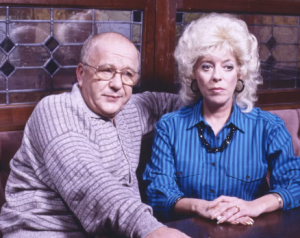
As the final, unresolved notes of this action-packed historical retrospective continue to echo across the digital media landscape, the entire structural framework of contemporary soap opera production stands completely up in flames, leaving classic British television update channels trapped in a state of absolute, edge-of-your-seat nostalgia. Barraclough’s unvarnished, late-career reflections masterfully exposed a widening gap between the character-driven wit of his prime and the modern, multi-front sensationalism where soaps pathologically compete by endlessly mirroring each other’s explosive, short-fused stunt storylines. Fandom enthusiasts are out in full force across modern networks, passionately typing out thousands of comments to champion his legendary timing with Bet Lynch and Sarah Lancashire, while eagerly subscribing to the newly launched sister network, EastEnders Spotlight, to unearth the parallel secrets, backstage feuds, and forgotten exits that defined the golden age of Walford’s biggest legends. There are no safe havens, clean answers, or easy compromises left to shield today’s television dynasties from the radioactive critique of its fallen pioneers as the countdown clock ticks forward; make sure to smash that like button, subscribe to the channel immediately for your daily unvarnished vintage updates, recaps, and deep-cover historical tea, turn on those bell notifications so you never miss a single second of cinematic soap opera breakdown, and sound off in the comments section below with your absolute, most unscripted memories of the immortal Alec Gilroy!